 欢迎您,游客
 您当前的位置:LTO大会报告内容
LTO大会报告内容
来源:赵竣锋 发布时间:2018-12-19 15:10
Metalens for imaging and sensing
蔡定平
台湾大学
台湾大学
ABSTRACT:For applications of full-color imaging and detections, the correction of chromatic aberration is a key issue. The optical dispersion of resonance-based nanoantennas and the composition materials hinders the realization of an achromatic metalens, especially for the ones working in the visible spectrum. Recently, we introduce the integrated-resonant unit elements to incorporate with geometric phase method to realize achromatic metasurfaces. Broadband metalenses working over the near-infrared in reflection and entire visible spectrum in a transmission scheme are achieved, respectively. The average efficiency of gallium nitride (GaN) achromatic metalens with a numerical aperture of 0.106 is about 40%. Demonstration of full-color imaging and sensing using GaN achromatic metalens has been successfully achieved. Structural design of dispersion-engineered metasurfaces are expected to have numerous applications in the future flat optics technologies.
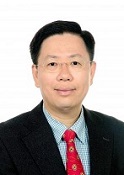 BIOGRAPHY: Professor Din Ping Tsai is a Distinguished Professor of Taiwan University. He is a Fellow of AAAS, APS, IEEE, JSAP, OSA, SPIE and Electro Magnetics Academy. He is also Academician of Asia Pacific Academy of Materials, and Member of International Academy of Engineering (IAE). He serves as an Editor of “Progress in Quantum Electronics”, an Associate Editor of “Journal of Lightwave Technology”, and a Member of Editorial Boards of “ACS photonics”, “Advanced Quantum Technologies”, “APL Photonics”, “Optics Communications”, “Opto-Electronic Advances”, “Optoelectronics Letters”, “Plasmonics”, “Physical Review Applied” and “Small Method”, respectively. He was the President of Taiwan Photonics Society (TPS); Director of the Board of SPIE; Member of OSA Fellow Honorary Committee; SPIE Fellow Committee; Member of IEEE I&M Fellow Committee; IEEE Joseph F. Keithley Award Committee; OSA and IS&T Edwin H. Land Medal Committee; IEEE I&M Fellow Committee; respectively.
.............................................
Coherent Anti-Stokes Raman Spectroscopy and Imaging of 2D materials
陆永枫
美国内布拉斯加大学
美国内布拉斯加大学
ABSTRACT:Van der Walls layered structures, primarily graphene and beyond-graphene 2D crystals, such as transitional metal dichalcogenides (TMDs), have recently attracted immense interest due to their unique physical properties and potential application in electronics, optoelectronics, and energy harvesting. Despite the recent progress, it is a challenge to perform comprehensive characterization of critical properties of these layered structures, including crystal structure, chemical dynamics, and interlayer coupling, using a single characterization platform. Recently, nonlinear optical responses in 2D layered structures have gained great interest. In this work, we developed a multimodal nonlinear optical imaging method to characterize critical properties of graphene, molybdenum disulfide (MoS2), and graphene-MoS2 heterostructures. A nonlinear optical spectroscopic imaging system was used to obtain nonlinear optical spectra and second-/third-order optical images of different 2D crystal samples. Our results demonstrate that graphene layers show large four-wave mixing (FWM) optical nonlinearity, while MoS2 layers exhibit strong FWM, sum-frequency generation (SFG), and second-harmonic generation (SHG) nonlinear optical characteristics. FWM imaging can be utilized to quantify the number of both graphene and MoS2 layers, which is more accurate and much faster than the Raman microscopy. The combined and simultaneous SHG/SFG-FWM imaging is not only capable of rapid evaluation of crystal quality and precise determination of odd-even layers but also provides in situ monitoring of the chemical dynamics of thermal oxidation in MoS2 and interlayer coupling in graphene-MoS2 heterostructures. This method has the advantages of versatility, high fidelity, easy operation, and fast imaging, paving the way for comprehensive characterization of van der Waals layered structures for fundamental research and practical applications.
 BIOGRAPHY: Dr. Yongfeng Lu is currently the Lott Distinguished Professor of Engineering at the University of Nebraska-Lincoln (UNL). He received his bachelor degree from Tsinghua University (China) in 1984 and M.Sc. and Ph.D. degrees from Osaka University (Japan) in 1988 and 1991, all in electrical engineering. From 1991 to 2002, he was a faculty in the Department of Electrical and Computer Engineering at National University of Singapore. He joined the Department of Electrical Engineering at UNL in 2002. He has more than 25 years of experience in processing and characterization of micro/nanostructured materials. His group has research projects funded by NSF, AFOSR, ONR, DTRA, DOE, DOT, NCESR, NRI, private companies, and foundations, with research expenditures over $27 million in the past a few years. His research has led to a number of commercialization and product developments. Dr. Lu has authored or co-authored 399 journal papers and 414 conference papers. He served as the President of the Laser Institute of America (LIA) in 2014. He is currently the President of International Academy of Photonics and Laser Engineering (IAPLE, UK). He has been elected to SPIE fellow, LIA fellow, OSA fellow, and IAPLE fellow. He has also served as chair and general chair for major international conferences in the field including the general congress chair for the International Congress of Applications of Lasers and Electro-Optics in 2007 and 2008, and general co-chair for LASE in Photonics West 2014-2017. He is also the recipient of the prestigious Schawlow Award of LIA in 2016.
.............................................
Advances in Optics for Surgery & Radiation Therapy
Brian W. Pogue
Dartmouth College & Dartmouth-Hitchcock Medical Center
Dartmouth College & Dartmouth-Hitchcock Medical Center
ABSTRACT:The process of imaging medical treatments today is dominated by optical devices which are used at the point of care, in settings such as surgery and endoscopy. These procedure-based tools are used together with radiologic devices to capture unique contrast features that help guide medical decisions about tissue removal and tissue response to therapy. In the developments in technologies and nanotechnologies within the world of Optics in Medicine have made major advances, such as image-guided spectroscopy during surgery, as well as surgical guidance navigation tools, and now radiologic guidance tools. Examples from each will be used to highlight innovations in translational research that have gone from concept through to clinical trials, and now through to multicenter trial use. In particular, nanotechnologies that bring together the strengths of radiation therapy and photodynamic therapy have the potential to advance cancer treatment by dose enhancement and better targeting. Translation beyond the initial feasibility phase involves the type of R&D which only companies can accomplish, and so partnerships with companies in translational research has been paramount, and examples in surgical guidance can show this. Translation through a start up company, DoseOptics LLC, will be highlighted in which this pathway has enabled testing and deployment of a fundamentally new technology to image radiation dose delivery in real time.
 BIOGRAPHY: Brian W. Pogue, Ph.D. is the MacLean Professor of Engineering at Dartmouth in Hanover, New Hampshire USA, and is Adjunct Professor of Surgery at the Geisel School of Medicine. His Ph.D. is in Medical Physics from McMaster University, Canada. He was Research Fellow at the Massachusetts General Hospital & Harvard Medical School. At Dartmouth since 1996, he works in the area of Optics in Medicine, with a focus on novel imaging systems for imaging and therapy for cancer. He was Dean of Graduate Studies at Dartmouth from 2008-2012 and is now Director of MS and PhD Programs in Engineering Science & Medical Physics. He has published over 350 peer-reviewed papers and >400 conference papers in cancer therapy, surgery, medicine, medical oncology, and radiotherapy. His research is funded by the NIH through two Program Project grants as well as several individual R01 grants. He is the Editor-in-Chief of the Journal of Biomedical Optics published by SPIE and is a Fellow of the Optical Society of America (OSA) and the American Institute of Medical and Biological Engineers (AIMBE). He recently founded the startup company DoseOptics LLC, making the world’s first camera to image radiotherapy dose delivery.
.............................................
天基激光移除空间碎片技术研究进展与展望
龚自正
中国空间技术研究院
中国空间技术研究院
摘要:概述了天基激光烧蚀驱动移除空间碎片技术原理与国内外研究现状。详细介绍了国内近年来激光烧蚀驱动移除空间碎片的研究进展,包括:激光烧蚀下微冲量的实验测量;激光烧蚀驱动不同材质、不同几何形状、不同旋转姿态碎片运动的动力学模型建模;空间碎片降轨清除判据和降轨移除模式;地面演示验证实验;数值仿真模拟实验等。给出了移除几种典型低地球轨道上空间碎片所必须的速度增量、激光器功率、单脉冲能量、激光发射镜直径及对跟瞄系统的要求等主要参数,分析了天基激光清除空间碎片技术可行性。分析了天基激光烧蚀驱动移除空间碎片技术仍然需要深入研究的若干问题,展望了发展趋势。
个人简介:龚自正,博士,中国空间技术研究院首席研究员,博士生导师,航天科技集团学术技术带头人。国际机构间空间碎片协调委员会(IADC)防护工作组主席、国际宇航科学院(IAA)空间碎片委员会委员、国防科工局空间碎片防护专家组副组长、航天科技集团科技委空间安全专家组成员。中国交叉科学学会理事长、中国光学工程学会常务理事、中国物理学会高压物理专业委员会委员、中国力学学会爆炸力学专业委员会委员。《航天器环境工程》主编、《宇航学报》、《高压物理学报》、《动力学与控制》等编委。 长期从事空间碎片防护与清除、冲击动力学、高压物理等研究。承担、完成军/民973、863、国家自然科学基金重大和重点、国防科工局空间碎片专项等国家级项目20余项。获部级科技进步一等奖1项,发表论文260余篇(其中1篇Nature),出版专著1部,主编出版文集5部,制定GJB、QJ标准5项,专利10余项。研究成果在重要航天型号上获得应用,央视《焦点访谈》曾给予采访报道。